Sadeas's bridgeman policy
The Way of KingsSadeas's bridgeman policy is the military doctrine behind the bridge crews used by Torol Sadeas on the Shattered Plains: bridgemen carry bridges across chasms under fire, but their deeper function is to attract Parshendi arrows. The policy transforms human beings into disposable battlefield equipment. Its effectiveness is measured not by how many bridgemen survive, but by how reliably their deaths protect soldiers whom the army considers more valuable.
Design and Military Logic
Torol Sadeas explains the system as a calculated response to Parshendi tactics. He had first tried giving bridgemen shields, but the protection made them less attractive targets, so the Parshendi redirected their volleys toward soldiers and horses. Sadeas therefore doubled the number of bridges sent on each run and made the bridges extremely light, removing armor and shields that might slow the crews. The exposed men became an irresistible target, while the regular army advanced with fewer arrows striking it.
The policy depends on a brutal distinction between trained troops and replaceable labor. Sadeas has only a limited supply of soldiers who have been expensively equipped and trained, but untrained men are easy to obtain. In that calculation, every arrow that kills a bridgeman is an arrow that does not kill a soldier. The system is therefore not an accidental waste of troops; it is a method for transferring battlefield risk downward, from mounted soldiers and officers to enslaved men carrying siege equipment.
Sadeas's officers define the bridge crews in the same terms. Lamaril states that bridgemen exist to protect the lives of more valuable men, while Sadeas maintains his advantage by forcing every man into a fixed place. Speed is encouraged, but initiative is regarded as dangerous when it makes a bridgeman dissatisfied with his assigned position. The policy requires not only expendable bodies but also discipline strong enough to keep those bodies moving toward danger.
Operation on the Battlefield
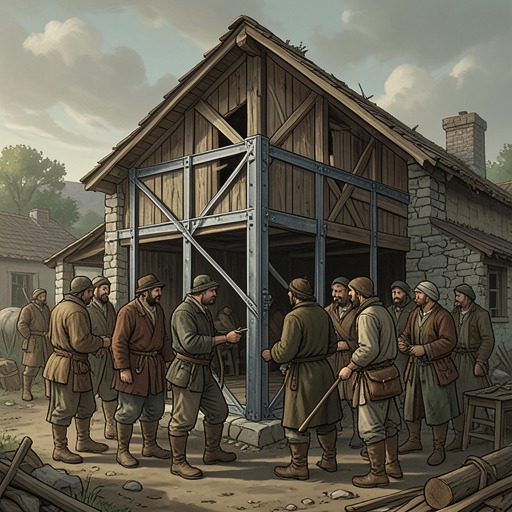
A bridge run makes the policy visible. When Gaz commands an assault, the crews lift their bridges and run beside the standing ranks of the army, passing soldiers with spears and shields. Kaladin Stormblessed takes the front position with Leyten beside him and Murk on the other side; the men at the front form what the bridge crews call the deathline. Their task is to reach the final chasm quickly, place the bridge, and allow the protected forces to cross.
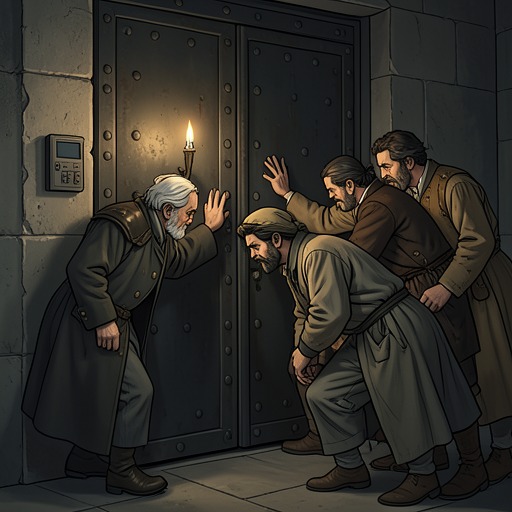
The arrangement makes obedience a trap. Bridgemen who lag during work are whipped, and those who lag during a run are executed. Refusing to charge the Parshendi is treated as the one offense that leads directly to beheading. Other punishments include extra labor, whipping, docked pay, and being tied to a post or wall to face a highstorm. The rule communicates that running toward certain death is compulsory, while refusing that death is itself treated as a capital crime.
The bridge crews are also kept in excess of battlefield need. Kaladin eventually understands that Sadeas fields more bridgemen than necessary and often sends twice as many crews as the army requires. Two or three bridges, sometimes more, may fall on a disastrous run. The losses are acceptable so long as the Parshendi continue firing at the exposed carriers instead of at trained soldiers. The apparent logistical redundancy is thus part of the policy's design: surplus crews ensure that bridges still reach the chasms after the bait has been consumed.
Discipline, Punishment, and Concealment
The policy is enforced through the body. Kaladin Stormblessed bears three brands on his forehead, including the fresh glyph Shash, meaning dangerous, marking him as a threat before he can speak or act. His presence among the slaves illustrates how military suspicion and forced labor overlap: a man with a history of escape is made visibly legible to guards and masters, while the bridge system treats every other body as equally available for loss.
The punishments are staged as examples. Kaladin is left hanging upside down by his ankles against the fifteen-foot Soulcast barrack after being beaten, a fate he has seen imposed on other bridgemen for murder or repeated theft. The spectacle turns pain into instruction for everyone who sees it. Even the possibility of being sent into the bridge crews operates as a threat against lower-ranking overseers, as Lamaril reminds Gaz when he warns him not to forget his place.
The system also depends on keeping its true purpose obscure. Gaz recognizes that the bridgemen probably do not understand why they are worked so pitilessly or why shields and armor are forbidden. If they understood that they were bait, he believes, many might throw themselves into the chasm rather than continue serving Sadeas's plan. Knowledge would threaten the policy because it could convert passive suffering into collective refusal.
When Kaladin begins to inspire the bridgemen, concealment becomes a political necessity. Gaz considers a knife in the night or poison in the food, but Lamaril rejects an assassination that might expose Kaladin as a genuine threat and create a martyr. Kaladin must instead die on the field, where his death can be absorbed into the ordinary casualty count. The policy therefore requires not merely killing bridgemen, but controlling the interpretation of their deaths.
Human Cost and Resistance
The consequences are visible after a retreat, when Kaladin Stormblessed crosses a bridge to inspect the Alethi soldiers. The scene resembles a triage tent: nearly every man is wounded, men in the center stumble and limp, and those on the edges continue fighting in bloodied and torn uniforms. Even when the system protects trained soldiers more effectively than it protects bridge crews, it does not eliminate suffering; it distributes suffering according to rank and military value.
Kaladin's own response begins with recognition. He understands that the crews are not simply the poorest men sent first into danger, but deliberately exposed bait whose lack of protection is what makes them useful. That insight changes the moral shape of every bridge run. The bridge remains necessary to cross the chasm, yet the organization surrounding it reveals that necessity has been arranged to preserve some lives by spending others.
The Honor Chasm offers the policy's starkest counterpoint. Bridgemen call it the place where they can make the one decision left to them, the so-called honorable decision of death. The chasms are already wounds in the land, but Kaladin sees that they also break the people brought there. Against a system that commands men to die publicly for the army, suicide becomes the only choice that appears to belong to them.
The policy's larger contradiction emerges through Dalinar Kholin's resistance to its logic. Torol Sadeas treats an unarmored bridgeman as categorically worth less than a mounted knight in Plate, but The Way of Kings presents that hierarchy as incompatible with the words Dalinar Kholin remembers from Gavilar Kholin. The military system calls the men expendable; the book's moral vocabulary asks what obligations remain when power has made expendability convenient.
Narrative and Thematic Significance
Sadeas's bridgeman policy turns warfare into a system of organized substitution. The army's apparent efficiency rests on a hidden exchange: trained soldiers receive protection because enslaved laborers absorb the arrows meant for them. Its language of function, discipline, and effectiveness conceals the fact that the bridge crews are both workers and targets, valued precisely because their deaths can be repeated.
That structure also establishes the conflict between institutional survival and individual worth. Torol Sadeas can defend the policy as effective, and the battlefield results support his calculation, but the same calculation makes compassion appear inefficient and initiative appear subversive. Kaladin Stormblessed's growing leadership contests the assumption that the bridgemen must remain in their assigned place. Their ability to understand the system threatens the system more deeply than any isolated act of disobedience.
The policy ultimately matters because it gives the Shattered Plains war a human cost that cannot be hidden behind strategy. Bridges cross the chasms, soldiers advance, and commanders preserve their forces, but the mechanism is a recurring procession of unarmored men running toward arrows. Its central achievement is therefore also its indictment: Sadeas has devised a highly effective way to win ground by making the lives of bridgemen disappear into the mathematics of battle.